 Wael.T
 Explore if a 10kW solar system is sufficient for your California home. Learn about energy needs, system sizing, costs, and key considerations for optimal…
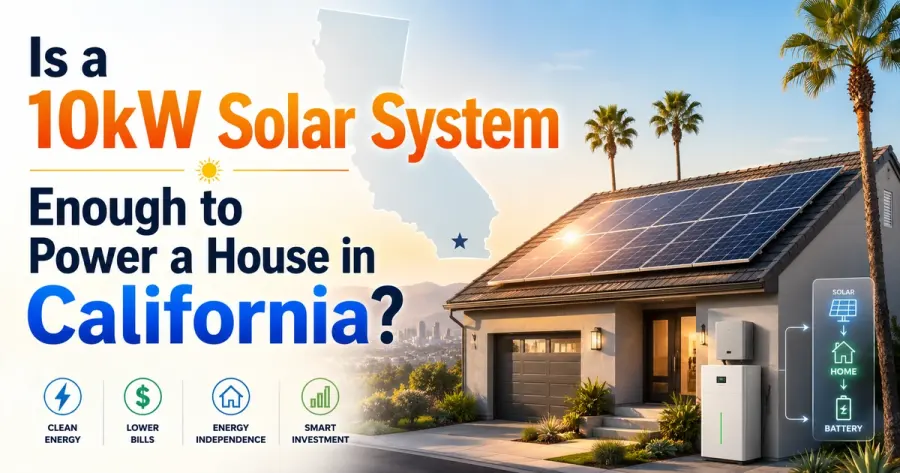
With California leading the way in solar adoption, homeowners are increasingly considering a 10kW solar system to power their homes. But is a 10kW system really enough to meet the energy needs of a typical California residence? In this in-depth guide, we’ll cover what a 10kW solar system can deliver, how much power you actually need based on Californian lifestyles, factors influencing your decision, cost considerations, and practical steps if you’re planning to go solar.
Understanding a 10kW Solar System: What Does It Mean?
The term '10kW' refers to a solar system rated to produce 10 kilowatts (or 10,000 watts) under ideal conditions. This rating, known as “peak DC output,” indicates how much electricity the panels can generate at maximum sunlight. It’s one of the most popular residential solar sizes in California due to the state's high electricity consumption and abundant sunshine, but actual output depends on several site-specific factors.
- System Size (10kW): The sum of solar panel wattages installed, e.g., 25 panels rated at 400W each.
- Output Variations: Real-world conditions like shading, orientation, and weather reduce actual output to 70-90% of the rated maximum.
- AC vs. DC Output: Solar panels produce DC power, but your home uses AC, and conversion losses must be considered.
How Much Electricity Does a 10kW System Produce in California?
Thanks to California’s high solar irradiance, a 10kW solar system can typically produce more electricity per year compared to other states. Let’s break down the math:
- Sun Hours: California averages 5 to 6 sun hours per day, but it varies by region.
- Annual Output: 10kW system x 5 sun hours x 365 days = ~18,250 kWh per year on average.
- Monthly Output: Around 1,500 to 1,700 kWh per month, depending on site-specific conditions.
For a more precise estimate for your location, use our Solar Power Calculator, which accounts for local solar irradiance, system orientation, and other factors.
The Average California Home's Power Consumption
How much electricity does a typical household in California use? According to the U.S. Energy Information Administration (EIA), California homes use about 500-600 kWh per month, considerably less than the national average, thanks to mild climates and energy efficiency.
- Statewide Average: 6,000 to 7,200 kWh/year per home.
- Larger or Electrified Homes: Bigger houses with electric HVAC, EV charging, or pools may exceed 15,000 kWh/year.
- Regional Differences: Inland or desert homes often require more air conditioning than coastal areas.
Is 10kW More Than Enough for Most Homes?
For average households, a 10kW system often produces twice as much power as needed, frequently generating a surplus. However, for energy-intensive homes with large appliances, electric cars, or spas, this system may be correctly sized or even slightly undersized depending on usage patterns.
How to Accurately Size Your Solar System
Correct sizing is crucial for maximizing your investment and reducing reliance on the grid. Here’s how you can determine what system size you actually need:
- Review Past Energy Bills: Calculate your monthly and annual kWh usage.
- Evaluate Lifestyle Changes: Consider planned additions like EVs or heat pumps.
- Assess Site Conditions: Is your roof shaded, oriented south, or angled optimally?
If you’re uncertain about your home's power needs or want to compare appliances, try our Appliance Electricity Cost Calculator.
Factors Affecting 10kW Solar Output in California
Even in the Golden State, how much power you get depends on more than just panel size. Here are key factors influencing your installation’s real-world output:
- Location: Fresno and Palm Springs get significantly more sunlight than San Francisco or coastal areas.
- Roof Orientation: South-facing, well-angled roofs maximize output.
- Shading: Trees, buildings, or obstructions reduce electricity production.
- Panel Efficiency: Higher-end panels (over 21% efficiency) deliver more power from the same roof area.
- Inverter Efficiency: Modern microinverters or optimizers minimize conversion losses.
Typical Roof Space Required for a 10kW System
Most residential solar panels measure around 17-19 square feet and deliver 350-425 watts each. For a 10kW system, you’ll need:
- 24 to 30 panels, depending on the panel wattage chosen
- Roof area: generally 400 to 600 square feet of unshaded space
If your home has a complex roof, or space is limited, higher-wattage or higher-efficiency panels can help maximize your solar potential.
Net Metering and Utility Policies in California
California's net metering policies allow you to earn credits for any excess solar energy you send back to the grid, effectively using the utility as a battery.
- Net Metering 3.0: As of 2023, export rates for new systems are lower, but solar still offers strong value, especially with battery storage.
- Time-of-Use (TOU) Rates: Shifting your power usage to match solar output maximizes bill savings.
- Batteries: Adding battery storage allows you to use stored energy at night, further reducing reliance on the grid.
For more on electricity rates and savings analysis, consult our Electricity Cost Calculator.
Financial Considerations: Cost of a 10kW Solar System in California
The installation cost of residential solar has declined dramatically. In California, a fully installed 10kW system usually costs between $25,000 and $35,000 before incentives, but prices vary according to equipment, installer, and complexity.
- Federal Solar Tax Credit: Cuts 30% off system cost until at least 2032
- California Local Incentives: Some utilities and counties offer additional rebates
- Long-Term Savings: Most systems pay for themselves in 6-10 years, then provide free power for 15+ years afterwards
Curious about what your payback period could be? Use the detailed Solar Panel Payback Calculator to estimate return on your investment.
Should You Consider Going Bigger or Smaller?
While a 10kW system is more than enough for most California homes, there may be reasons to customize your size:
- Consider Going Bigger: If you plan to add electric vehicles, switch to electric heating/cooling, or want to ensure fully offset bills, scaling up is wise.
- Consider Going Smaller: If your energy use is below 6,000 kWh/year, or if space/budget is tight, a 5-7kW system may be right.
Maximizing Efficiency: Ways to Reduce Your Home’s Energy Needs
Installing energy-efficient appliances, LED lighting, upgraded insulation, and smart thermostats can reduce your solar requirement and lower overall costs. For personalized savings, use our Appliance Electricity Cost Calculator to find which devices consume the most power in your home.
FAQs: 10kW Solar Systems for California Homes
- Q1. Will a 10kW solar system make my home net-zero in California?
A 10kW system will produce enough power to fully offset most California household electricity usage, making you “net zero” for annual grid consumption. Higher-use homes or sites with less sun may need a larger system or more efficiency upgrades. - Q2. How long does it take to install a 10kW system?
Most installations take 1-3 days plus time for design, permitting, and utility interconnection (2-8 weeks total process). The physical panel installation itself is usually very quick. - Q3. Do I need a battery with my 10kW system?
Batteries are optional but increasingly popular to maximize solar self-consumption, manage power outages, and benefit from California’s new net metering rules. They add significantly to upfront cost but can be a wise investment. - Q4. How do I calculate exactly how many panels I’ll need?
Divide 10,000W by your chosen panel wattage—e.g., 10,000W / 400W = 25 panels. You can experiment with combinations using a Solar Power Calculator for best results. - Q5. What’s the difference between DC and AC solar output?
Panels are rated in DC but your house uses AC. Inverters convert electricity, and about 10-15% of power is lost in the process. System ratings are in DC, so always factor in inverter efficiency for real-world AC output. - Q6. Can I expand my solar system later?
Many installers allow for future expansion. If you expect your energy usage to rise, tell your solar provider now to ensure your inverter and panel setup is flexible enough to add more panels later.
Additional Resources
- California’s official solar program details: California Energy Commission solar guidance
- U.S. Department of Energy guidance for sizing a home solar system: U.S. Department of Energy homeowner solar guide
Conclusion: Is a 10kW Solar System Enough in California?
For the vast majority of California homes, a 10kW solar system provides more than sufficient power to cover annual electricity use, especially given the state’s ample sunshine and favorable solar economics. Some larger, electrified, or high-usage homes may require even more capacity, while smaller or highly efficient homes can offset their usage with a smaller array.
If you are considering a solar installation, make sure to:
- Assess your real energy usage and potential
- Factor in site specifics—roof size, orientation, and shading
- Take advantage of local and federal incentives while they last
- Plan ahead for electric vehicle charging or other load increases
The shift to renewable energy is both environmentally and financially sound, especially in California. Take the guesswork out of your decision by using trusted online tools like our Solar Power Calculator or Solar Panel Payback Calculator and consult with local experts. By doing so, you’ll ensure your solar investment is sized for maximum performance and long-term value.